

Whole House Surge Protector NYC: What ‘Whole-Home’ Protection Means in Apartments
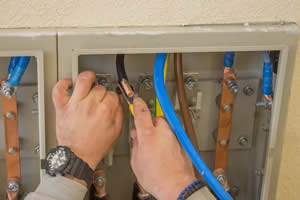
In New York City apartments, “whole-home” surge protection means installing a panel-mounted surge protective device at your unit’s breaker panel so a sudden spike from the grid or building equipment does not ruin your electronics, HVAC, or appliances. If you want a quick overview before scheduling, start with our panel-mounted surge protection page from Crossland Management & Electric, Inc..
What “Whole-Home” Really Means in NYC Apartments
Most apartments, co-ops, and condos don’t have a private service drop like a single-family house. Power enters the building, then branches to each unit. Building management may add surge protection at the main service, but that does not guarantee full protection inside your apartment. Your best layer is a surge protective device mounted at your unit’s panel, because it stops damaging spikes before they flow across the circuits that feed your outlets, lighting, and hard-wired equipment.
Think of the building’s main protection as a lobby doorman. Helpful, but not enough by itself. The unit-level protector is like a lock on your own front door. It stands guard right where trouble could get in.
Why Surge Protection Matters Across New York City
Summer lightning, fast utility switching after outages, elevator motors, and large equipment starting up in the same building can all send quick voltage spikes. That is common from Astoria to the Upper East Side and from Long Island City to Downtown Brooklyn. You might not notice a small surge, but tiny hits add up. Over time they shorten the life of fridges, smart ranges, washers, routers, and TVs. One big spike can take out a window AC or PTAC in seconds.
Older prewar co-ops often have panels that were never designed for today’s loads, while newer condos pack more electronics into smaller spaces. Either way, a panel-mounted device gives steady protection without relying on a dozen point-of-use strips scattered around each room.
How Surge Protection Works in Co-ops and Condos
In multi-unit buildings, protection happens on two levels:
- Building-level: Management may install protection near the main service. Good for common areas and general risk, but not tailored to your unit’s wiring.
- Unit-level: A panel-mounted surge device in your apartment shields the circuits you live on every day. This is the “whole-home” layer for apartments.
Where is the unit panel? In many NYC homes it is inside a closet or near the entry door. In some buildings, it might be in the hallway or a locked service room. If access needs coordination, Crossland Management & Electric, Inc. works with your super or property manager so the visit runs smoothly.
What It Protects: HVAC, Appliances, and Smart Gear
Today’s appliances use sensitive boards. A strong unit-level protector helps guard:
- HVAC equipment such as window ACs, PTACs, mini-splits, and air handlers
- Kitchen gear like induction ranges, refrigerators, and dishwashers
- Smart TVs, streaming boxes, speakers, game consoles, and Wi-Fi routers
- Home office essentials such as laptops, monitors, and desktop computers
It also reduces stress on your in-wall wiring and breakers. That means fewer nuisance failures and less chance of hidden damage after a storm or outage.
Panel-Mounted Devices vs. Plug-In Strips
Not all protection is equal. Here is how the two common approaches compare:
Important: plug-in strips are helpful, but they are not a whole-home solution.
panel-mounted device at the unit panel
• Stops large spikes before they spread across your apartment’s circuits. • Protects hard-wired items, not just what is plugged into a strip. • Works quietly in the background and does not clutter outlets.
power strip or outlet-style protectors
• Add a second layer for a TV or computer. • Do not protect hard-wired loads like lighting or built-in appliances. • Easy to overload or forget to replace after they wear out.
What “Whole-Home” Looks Like in Different NYC Buildings
Every building type brings a few quirks:
Older prewar co-ops: Smaller panels and compact closets are common. A panel-mounted device still fits most setups, and it helps protect original circuits that feed living rooms and bedrooms.
Postwar rentals and brick mid-rises: Panels are often near the front door. Protection here cuts risk from window ACs cycling during July and August peak hours when brief sags and spikes are more likely.
Newer luxury condos: Smart appliances and central air add sensitive electronics. A unit-level protector helps keep high-end devices running longer.
What To Expect On Installation Day
A licensed electrician from Crossland Management & Electric, Inc. reviews your panel, grounding path, and space for a panel-mounted device. In most apartments, work is done at your unit panel with simple access. Some buildings require coordination for a hallway panel or a locked electrical room. Timing varies by building and panel condition, but most visits are planned to minimize downtime and keep common areas clear.
You will get a walkthrough of the device’s indicator lights and how to spot any future trouble. There is no complicated upkeep for you. If you are curious about the basics before we arrive, you can also skim our overview of surge protection for apartments to see how the unit-level layer fits into a multi-unit building.
Maintenance: Simple Checks That Make A Big Difference
Surge devices work silently until they take a hit. Most have status lights. Glance at them once in a while, especially after big summer storms or winter outages. If a light changes color or turns off, that is your cue to schedule a visit. Some devices sacrifice part of their capacity during a major surge, so a quick inspection keeps your shield strong.
It is also smart to add a few quality point-of-use protectors for your most sensitive electronics. That gives you layered protection: the panel device handles big spikes, and the strips clean up the small stuff at your desk or media center.
Choosing A Trusted NYC Electrician
Apartment work takes know-how and respect for neighbors, supers, and boards. Crossland Management & Electric, Inc. installs panel-mounted surge protection across the five boroughs with clean workmanship and clear communication. If you want to learn more about the topic or other services we offer, you can start at our home page under whole house surge protector nyc and browse additional electrical resources.
Seasonal Moments When Protection Pays Off
New York City weather keeps you on your toes. Late-spring thunderstorms roll over the Hudson and East River. July heat loads push AC compressors hard from Midtown to Jackson Heights. Nor’easters can bring outages and fast utility switching. During these moments, a split-second surge can be the difference between a quiet evening and a dead refrigerator. Strong, panel-mounted protection turns those surprises into non-events.
Common Myths We Hear In New York City
“My power strip is enough.” A strip can help a single device, but it does not protect lighting circuits, built-ins, or your HVAC. It also wears out over time.
“The building has something, so I do not need it.” Building-level gear is useful, but it cannot fully protect individual units. Your best defense is at your panel.
“I will wait until after summer.” Surges do not follow a schedule. Fast switching and equipment cycling happen year-round.
Ready To Protect Your Apartment In New York City?
If you want your electronics, HVAC, and appliances to last longer, add unit-level protection now. Schedule with Crossland Management & Electric, Inc. at 718-740-0939 or use our quick form. To move forward today, visit our surge page and tell us about your building and panel: apartment surge protection in nyc.


